
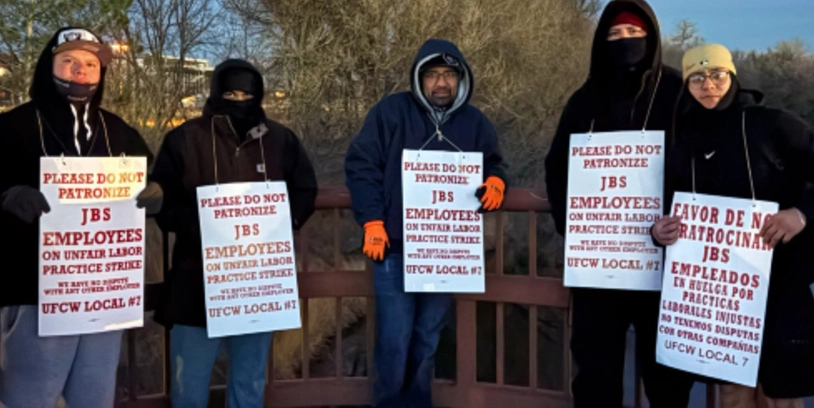
The North American protein supply chain is facing a significant disruption starting Monday morning as approximately 3,800 workers at the JBS-owned Swift Beef Company plant officially commenced an Unfair Labor Practice (ULP) strike. Represented by UFCW Local 7, the workforce walked off the job at 5:30 a.m. on March 16, following the expiration of a contract extension and months of deadlocked negotiations.
The strike at JBS’s flagship Greeley facility—the world’s largest protein producer—comes after a near-unanimous 99% strike authorization vote in February. For B2B stakeholders and retail partners, the walkout signals potential tightening in beef processing capacity and highlights a growing rift between labor and management over the “dignity the workers deserve”.
A Breakdown in Bargaining
According to UFCW Local 7, the member-led bargaining committee met with JBS representatives more than two dozen times in an attempt to secure a contract that reflects the rising cost of living in Colorado. The union alleges that JBS has maintained really low wage offers, averaging less than 2% annual increases, while simultaneously shifting the burden of rising healthcare premiums onto the employees.
“JBS has been stealing from workers’ paychecks to fund the Company’s profits,” stated Kim Cordova, President of UFCW Local 7. “The company can afford to do better.”
Central to the dispute are allegations of systemic wage theft and unconscionable deductions. The union claims that many workers are being charged $1,100 or more to offset the cost of essential personal protective equipment (PPE)—gear required simply to ensure workers return home safely. Furthermore, the union points to a reported $55 million settlement involving JBS and other industry giants over allegations of wage-fixing collusion as evidence of a broader effort to suppress worker earnings nationwide.
The Economic Divide
The financial gap between the two parties appears remarkably narrow relative to the plant’s output. The union reports that the difference between their wage proposal and the company’s “Last, Best, and Final” offer amounts to approximately $30,000 per week for the entire 3,800-person workforce.
However, the conflict has escalated beyond mere percentages. The ULP strike was triggered by claims of retaliation against workers standing up for their rights and threats from JBS to withhold proposed bonuses and lump-sum pension payments if workers exercised their right to strike.
Related Article: Albertsons Labor Agreement Averts Strike, Secures Gains for Workers
Industry Implications
As the clock hit zero on the contract extension Sunday night, the strike began a countdown of its own for the beef industry. With the Greeley plant being a critical hub for domestic beef production, a prolonged stoppage could pressure wholesale prices and supply consistency for retailers.
“The goal of negotiations is never to go on strike,” Cordova added. “But when the Company violates workers’ rights and ignores concerns about safety and health, they give workers no choice but to stand together.”
As of Monday afternoon, JBS has not signaled a return to the table with a revised offer, leaving the industry to watch closely as one of its most vital processing links remains sidelined.