
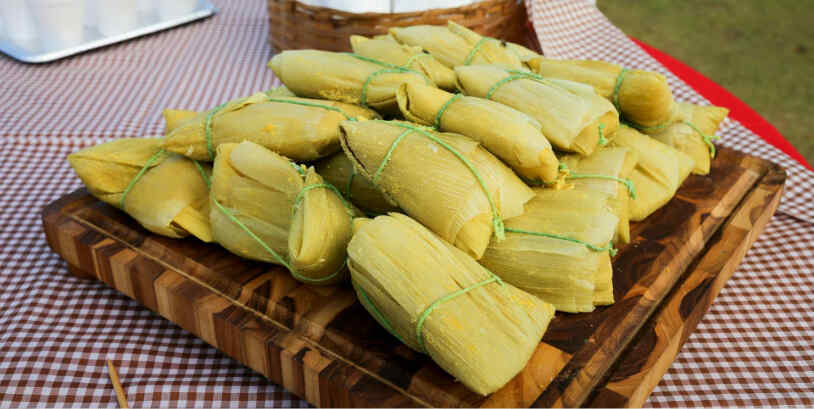
In Latin America, gastronomy is more than just food—it represents memory, identity, and tradition. Some recipes evolve according to each country’s culture, like the Mexican tamale.
This preparation is one of the most emblematic dishes. In fact, the recipe has been passed down from generation to generation. But what distinguishes it from the Colombian tamale?
Keep reading and explore the most notable differences. Here, you’ll discover flavors and understand the customs and lifestyle of communities with a rich heritage.
Table of contents
- 15 Characteristics That Distinguish Mexican and Colombian Tamales
- 1. Origin and Tradition of Tamales in Mexico and Colombia
- 2. Ingredients in Each Version
- 3. Types of Dough: Texture and Preparation Differences
- 4. Most Common Fillings in Each Country
- 5. Use of Leaves: Banana vs. Corn
- 6. Cooking Techniques and Preparation Time
- 7. Shape and Presentation
- 8. Flavors and Seasonings
- 9. Regional Varieties in Mexico
- 10. Regional Varieties in Colombia
- 11. Typical Side Dishes
- 12. Occasions for Eating Tamales
- 13. Size and Portions: Which Is Bigger?
- 14. Nutritional Value Differences
- 15. International Popularity
15 Characteristics That Distinguish Mexican and Colombian Tamales
Although they share the same name and are wrapped in leaves, they are very different culinary worlds—especially in texture, preparation, and presentation.
In the following sections, we outline at least 15 characteristics that will help you understand the heritage and ingredients of two important cultures.
1. Origin and Tradition of Tamales in Mexico and Colombia
Tamales have an ancestral origin linked to the indigenous cultures of Mesoamerica. For them, corn was a sacred food. However, each country has made it its own:
- Mexico: It has kept the tradition alive, and today tamales are considered part of popular cuisine. They stand out for their regional diversity and strong historical connection.
- Colombia: Tamales were adopted and adapted to local customs. They are associated with family breakfasts and special moments, reflecting abundance and tradition.
Although they share a common root, each has unique characteristics. Tasting them offers a distinct and authentic culinary experience.
2. Ingredients in Each Version
Generally, Mexican tamales include corn dough, meat, sauce, and a wrapping leaf. Depending on the region, they may include chicken, chilies, or even sweet ingredients.
In contrast, Colombian tamales have a more complete and hearty mixture. Common ingredients include rice, potatoes, carrots, egg, chicken, and pork.
Their fillings clearly reflect very different culinary styles, despite sharing a corn base.
3. Types of Dough: Texture and Preparation Differences
Mexican dough is soft, light, and fluffy—especially when made with lard and nixtamalized corn. It has a delicate flavor that complements the fillings.
In Colombia, the dough is thicker, firmer, and more compact. It’s often mixed with other ingredients to create a denser bite.
This difference in dough is one of the most noticeable when tasting both versions.
4. Most Common Fillings in Each Country
The variety of ingredients makes tamales versatile and full of personality. In Mexico, common fillings include:
- Chicken
- Pork
- Cheese with chili strips
- Red or green sauce
There are also sweet versions with chocolate, strawberry, or raisins.
In Colombia, fillings are more complete and combined in one portion, including rice, egg, carrot, potato, chicken, and pork.
5. Use of Leaves: Banana vs. Corn
Most Mexican tamales are wrapped in corn husks, although banana leaves are used in some regions.
In Colombia, banana leaves are more common. They add a distinctive aroma, retain moisture better, and enhance presentation.
This difference significantly transforms the tasting experience.
6. Cooking Techniques and Preparation Time
In Mexico, tamales are steamed for several hours, requiring patience and care. This slow cooking allows the flavors to blend well.
Similarly, Colombian tamales are cooked wrapped in leaves in large pots until fully done. The process is also long and meticulous.
Proper cooking is essential—otherwise, the dough may become hard or the filling may lose flavor.
7. Shape and Presentation
Mexican tamales are typically individual, compact, and elongated or rectangular. Their wrapping keeps the filling contained and varies by region.
In Colombia, tamales are larger, heavier, and more abundant. They often have a rustic, homemade appearance.
8. Flavors and Seasonings
Mexican tamales are known for bold flavors from sauces, chilies, and spices—ranging from mild to very spicy.
Colombian tamales have a more balanced, comforting flavor, with less heat and a focus on the combination of ingredients.
The main difference lies in the intensity and type of seasoning.
9. Regional Varieties in Mexico
Mexico offers a wide variety of regional tamales, such as Oaxacan, Yucatecan, Veracruz-style, and more.
Each region adapts the recipe to local ingredients and traditions. Some are sweet, others savory or spicy.
This diversity makes tamales a dish rich in history and tradition.
10. Regional Varieties in Colombia
Similarly, Colombia has different regional versions, including:
- Tolima-style tamal
- Bogotá-style tamal
- Santander-style tamal
Ingredients, wrapping, and cooking time vary by region. Some are more compact, others softer or more filled.
11. Typical Side Dishes
In Mexico, tamales are often served with hot chocolate, atole, or coffee—especially at breakfast.
In Colombia, they are commonly served with bread, hot chocolate, or arepas.
In both countries, tamales are usually accompanied by a beverage or side dish.
12. Occasions for Eating Tamales
In Mexico, tamales are common at breakfast, family gatherings, festivals, and religious celebrations—especially on Día de la Candelaria.
In Colombia, they are popular during weekend breakfasts and special occasions like Christmas and Holy Week.
In both cultures, tamales are tied to shared moments and traditions.
13. Size and Portions: Which Is Bigger?
Colombian tamales are generally larger and heavier, often serving as a full meal due to their many ingredients.
Mexican tamales are smaller and more varied in size, depending on the region and preparation style.
Visually and in weight, Colombian tamales are usually bigger.
14. Nutritional Value Differences
Nutritional value depends on ingredients and portion size. Mexican tamales can be lighter or more calorie-dense depending on fat and filling.
Colombian tamales are more filling nutritionally, as they include rice, egg, meat, and potatoes.
Both can be part of a balanced diet when consumed in moderation.
15. International Popularity
Due to the global reach of Mexican cuisine, Mexican tamales are widely recognized around the world. They are featured in restaurants, festivals, and celebrations.
Although less internationally widespread, Colombian tamales are also popular abroad, especially in migrant communities and Latin restaurants.
Despite this difference, both represent cultural identity and hold an important place in global gastronomy.